
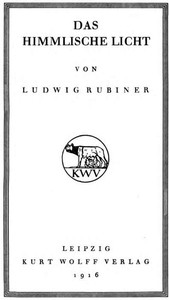
Das himmlische Licht: Gedichte by Ludwig Rubiner
So, what's actually in this book? 'Das himmlische Licht' is a collection of expressionist poems written by Ludwig Rubiner, a German writer and critic, right in the thick of the First World War. This isn't a story with a plot in the traditional sense. Instead, think of it as a journey through one man's emotional and spiritual landscape during a time of global crisis.
The Story
There's no linear narrative here. The 'story' is the conflict inside Rubiner's head and heart. The poems swing between despair at the violence and mechanization of the modern world and a desperate, almost frantic, yearning for transcendence. He looks at the suffering around him and asks where the divine has gone. He critiques society, dreams of revolution (both spiritual and social), and searches for a new kind of human—one connected to a purer, heavenly light. The collection builds as a series of intense, often fragmented images and declarations, moving from darkness toward a fragile, hard-won vision of hope.
Why You Should Read It
I'll be honest: some of these poems are challenging. They're dense and fiery. But that's why they stuck with me. Rubiner's voice feels incredibly urgent. He's not writing pretty verses to be admired; he's trying to break something open. Reading him, you get a direct line to the anxiety and idealism of a century ago, and it's startling how familiar some of it feels. His struggle to find light in the darkness, to believe in humanity's potential during its worst moments, is a timeless one. It made me think about my own search for meaning and what 'heavenly light' might look like today.
Final Verdict
This book is perfect for readers who like their poetry with a side of philosophy and history. It's for anyone curious about the Expressionist movement and the mindset of artists during WWI. If you enjoy writers who wrestle with big ideas and aren't afraid of emotional intensity—think of it as the poetic cousin to some of Kafka's prose—you'll find a lot here. It's not a light, before-bed read. It's a compact, powerful experience that demands your attention and leaves you with plenty to ponder.
This masterpiece is free from copyright limitations. You are welcome to share this with anyone.
Emma Hill
2 years agoSurprisingly enough, the clarity of the writing makes this accessible. Truly inspiring.
Donna Miller
2 years agoGreat reference material for my coursework.
William Sanchez
1 year agoAmazing book.
Linda Johnson
10 months agoHonestly, the arguments are well-supported by credible references. Highly recommended.



Jackson Allen
1 year agoThe formatting on this digital edition is flawless.