
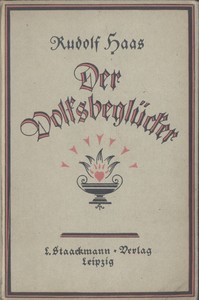
Der Volksbeglücker by Rudolf Haas
Published in 1913, Rudolf Haas's Der Volksbeglücker (The People's Benefactor) is a novel that feels both of its time and strangely current. It's a story about popularity, power, and the murky motives behind public acts of goodwill.
The Story
The book follows Karl, a man of humble origins who climbs the social ladder through sheer force of personality and a savvy understanding of what people want to hear. He becomes known as a 'Volksbeglücker'—someone who delights or benefits the common people. We see him organize community events, advocate for reforms, and build a loyal following. His rise seems like a classic success story. But Haas carefully shows us the other side: Karl's growing ego, the political calculations behind his generosity, and the private sacrifices he and those around him make for his public image. The plot isn't driven by huge twists, but by the slow, steady examination of whether a man can be a public savior without being corrupted by the role itself.
Why You Should Read It
I was drawn in by how human Karl feels. He's not a cartoon villain. You see his genuine desire to do good, tangled up with his need for recognition and control. Haas doesn't judge him harshly; instead, he presents a portrait that lets you form your own opinions. The setting—pre-World War I Germany—adds a layer of quiet tension. You're reading about a society on the brink of massive change, watching a man try to shape his piece of it. The writing is clear and focused, pulling you into drawing rooms and public halls to listen to conversations that feel real. It made me think about how we choose our leaders and heroes today, and what we're willing to overlook if they make us feel hopeful.
Final Verdict
This isn't a fast-paced thriller. It's for readers who enjoy a deep, psychological character study. If you like books that explore the complexity of human ambition and the price of public life, you'll find a lot here. It's perfect for historical fiction fans who want a story focused on society and character rather than just big events. Think of it as a quiet, smart conversation with a thoughtful observer of human nature—one that was writing over a century ago but still has a lot to say to us now.
The copyright for this book has expired, making it public property. Thank you for supporting open literature.
George White
2 years agoThis book was worth my time since the content flows smoothly from one chapter to the next. I would gladly recommend this title.
Kenneth Miller
1 year agoThis is one of those stories where the pacing is just right, keeping you engaged. I couldn't put it down.
Nancy Lopez
7 months agoRecommended.
Patricia Taylor
11 months agoHonestly, the storytelling feels authentic and emotionally grounded. I learned so much from this.

Michael Hill
11 months agoWithout a doubt, the plot twists are genuinely surprising. I couldn't put it down.