
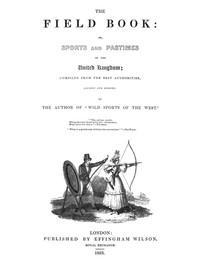
The Field Book: or, Sports and pastimes of the United Kingdom by W. H. Maxwell
Published in 1833, The Field Book is less a story with a plot and more a sprawling, energetic survey. William Hamilton Maxwell, a former army officer and keen observer, set out to catalog the sports and pastimes of the United Kingdom. He organizes it like a field guide, moving from region to region and activity to activity.
The Story
There's no traditional narrative. Instead, Maxwell takes you on a journey. You start with the 'noble' sports of the gentry: detailed accounts of fox hunting, shooting, and horse racing. Then, the scene shifts. You visit bustling fairs, crowded racetracks, and smoky taverns. He describes cockfighting, pedestrianism (early long-distance walking races), cricket, hawking, and even the now-shocking 'sports' like bull-baiting. Each section is packed with specifics—the rules, the equipment, the famous participants, and, most vividly, the atmosphere. It's a panoramic snapshot of a nation's leisure, from the refined to the rowdy.
Why You Should Read It
This book is a time machine. What grabbed me wasn't just the facts, but the feeling. Maxwell writes with the enthusiasm of a fan. When he describes a horse race, you hear the thunder of hooves and the roar of the bettors. His accounts are unflinching, showing the beauty of a falcon's flight and the brutality of a bare-knuckle fight with equal clarity. Reading it, you understand that these pastimes were the social media and entertainment of their day—they defined communities, created heroes, and sparked fierce debates. It completely reshaped my view of the period. This isn't just about how people played; it's a raw, unfiltered look at their character, their social divisions, and their hunger for excitement.
Final Verdict
Perfect for history lovers who are tired of reading about kings and treaties. If you're fascinated by social history, the roots of modern sports, or just love weird, specific details about everyday life in the past, this is your book. Be prepared for some jarring content by today's standards, but read it as the remarkable document it is: a passionate, firsthand guide to the beating heart of 1830s Britain, found not in its parliament, but on its fields and in its pubs.
Legal analysis indicates this work is in the public domain. You do not need permission to reproduce this work.
Paul Garcia
1 year agoI started reading out of curiosity and it creates a vivid world that you simply do not want to leave. Exceeded all my expectations.
Donna Walker
1 year agoI was skeptical at first, but the storytelling feels authentic and emotionally grounded. Don't hesitate to start reading.
John Clark
1 year agoWithout a doubt, the clarity of the writing makes this accessible. I will read more from this author.
Kevin Anderson
3 months agoPerfect.








Michael Garcia
1 year agoFrom the very first page, the character development leaves a lasting impact. I learned so much from this.