
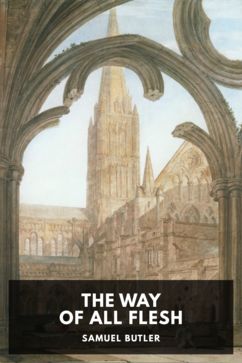
The Way of All Flesh - Samuel Butler
Published after his death, Samuel Butler's The Way of All Flesh is a semi-autobiographical novel that pulls no punches. It follows several generations of the Pontifex family, but zeroes in on Ernest, a sensitive boy born into a rigid, Victorian household.
The Story
The book is Ernest's life story, narrated by his godfather, Overton. We see Ernest's childhood, dominated by his cold, domineering father Theobald, a clergyman who sees parenting as a duty to break a child's will. Forced into the clergy himself, Ernest is miserable. He tries to be devout, but his faith shatters after a series of humiliations and a naive attempt to do 'good' that backfires spectacularly, landing him in prison. Hitting rock bottom becomes his salvation. Freed from family and fortune, he finally builds a life on his own terms, finding peace in simple work, writing, and a chosen family.
Why You Should Read It
This book is a slow burn of quiet rebellion. Butler's genius is in the details—the tiny cruelties of a pious parent, the soul-crushing weight of 'duty.' Ernest isn't a heroic rebel; he's awkward, often foolish, and his victories are small. That's what makes his journey so powerful. It’s not about a grand escape, but the daily work of unlearning a lifetime of conditioning. The satire is sharp and still hurts because, let's be honest, the pressures of family approval and social expectation haven't gone away. Reading it feels like getting permission to question the script you were handed.
Final Verdict
This is a perfect book for anyone who loves character-driven stories about the search for self. If you enjoyed the psychological depth of George Eliot or the social critique of Jane Austen, but wished they were a bit more cynical and direct, you'll love Butler. It's also a great pick for readers curious about Victorian life beyond the drawing rooms, in the cramped spaces of the human spirit. Fair warning: it’s not a breezy read—it’s thoughtful, sometimes painful, but ultimately incredibly rewarding. It’s the kind of classic that doesn’t feel like homework; it feels like a conversation.
This book is widely considered to be in the public domain. Access is open to everyone around the world.
David Perez
10 months agoMy professor recommended this, and I see why.
Charles Flores
1 year agoMy professor recommended this, and I see why.
Ava Clark
1 year agoEssential reading for students of this field.
George Williams
10 months agoLoved it.


Joshua Martinez
1 year agoFinally a version with clear text and no errors.