
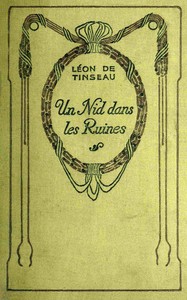
Un nid dans les ruines by Léon de Tinseau
Have you ever walked through an old, abandoned house and felt the stories in the walls? Un nid dans les ruines (A Nest in the Ruins) is that feeling turned into a novel. Written by Léon de Tinseau in the late 19th century, it’s a quiet, thoughtful story that explores the clash between past obligations and future hopes.
The Story
The story follows Jean, a young man who comes back to his ancestral home after a long absence. He finds the grand house in a sorry state—leaky roofs, peeling paint, a symbol of faded nobility. His family, particularly his mother and sister, are living in the shadow of former glory, clinging to old manners and debts. Jean is different. He’s practical and wants to restore the estate not to its old aristocratic splendor, but to a simple, honest, working life. The 'ruins' are both the physical house and the outdated social structures. The 'nest' is the new, modest home and future he tries to build within them. The whole book is the slow, often frustrating, process of that construction.
Why You Should Read It
What grabbed me was how real the conflict feels. This isn't about villains; it's about good people trapped by circumstance and tradition. Jean’s struggle isn't against a person, but against the gentle, smothering pressure of 'the way things have always been.' Tinseau writes with a sharp eye for detail. You can feel the damp cold of the house and the weight of every disapproving glance. Jean is a relatable hero—not because he’s always right, but because he’s trying so hard to do the right thing in an impossible situation. The book asks a timeless question: how much of our past do we carry with us, and how much do we leave behind to survive?
Final Verdict
This book is perfect for readers who enjoy classic literary fiction with a strong sense of place and deep character psychology. If you like authors like George Eliot or Thomas Hardy, where the setting is almost a character itself and the drama is internal and societal, you’ll appreciate Tinseau’s work. It’s a slow, character-driven burn, not a page-turner. But if you let yourself sink into its world, you’ll find a moving and surprisingly poignant story about the courage it takes to build something new, especially when you’re surrounded by what’s broken.
This historical work is free of copyright protections. You can copy, modify, and distribute it freely.
Logan Thomas
2 years agoThe formatting on this digital edition is flawless.
Joseph Nguyen
1 year agoClear and concise.
Joshua Robinson
2 years agoThe index links actually work, which is rare!
Donald Young
1 year agoUsed this for my thesis, incredibly useful.

Elizabeth Jones
1 year agoCompatible with my e-reader, thanks.